Chile’s Isolated Landscapes Reveal Sustainability’s Biggest Mistakes
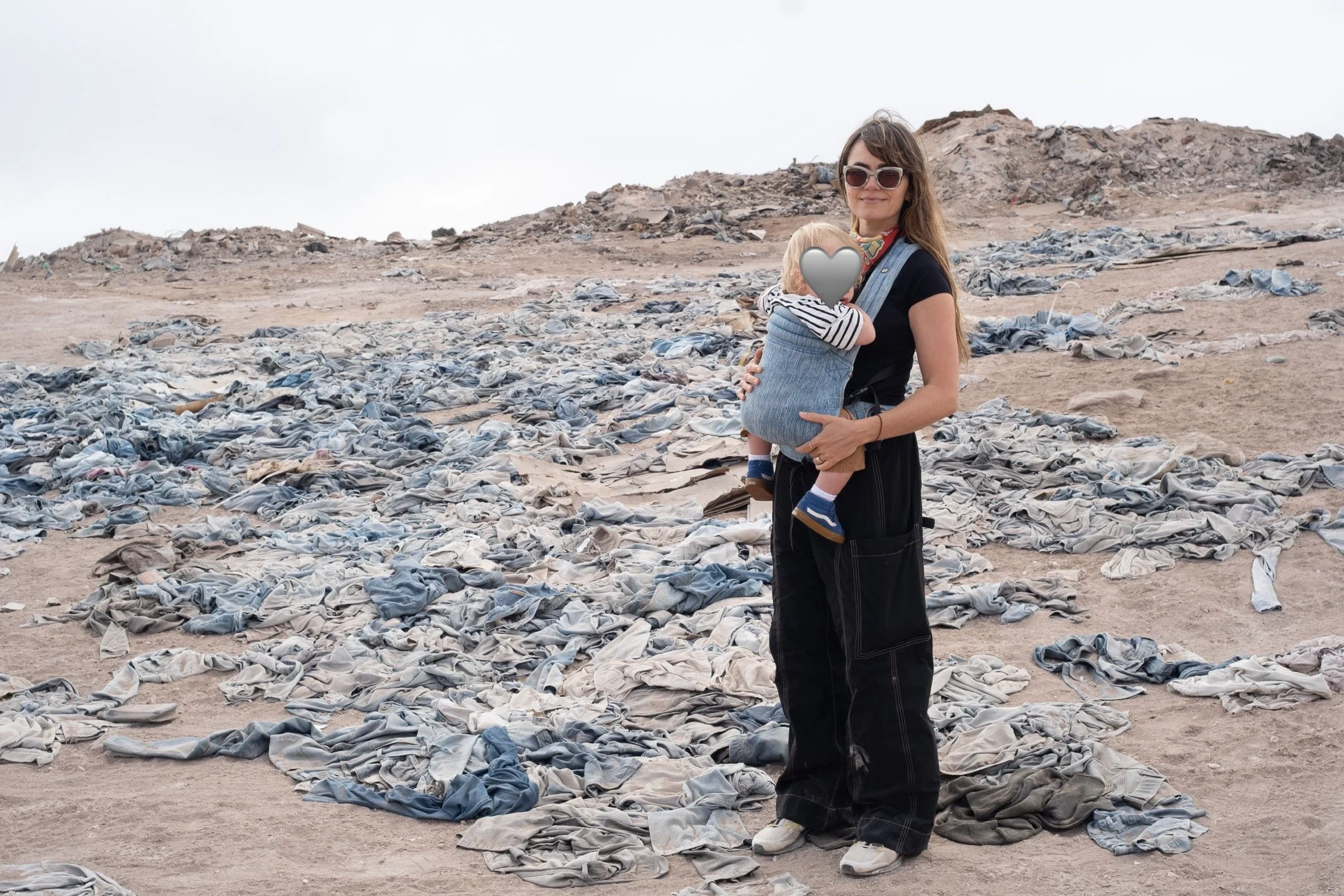
Last year, I stood on a mound of illegally discarded and burned denim in Chile’s Atacama Desert, my 1 year-old son in my arms.
The smell of charred textiles hung in the air against a backdrop of humble homes growing out of towering sand dunes. Under my feet were thousands of pairs of jeans - some new, some burned beyond recognition - from brands I’d once bought from, donated to, and even worked for.
After fifteen years leading sustainability and social-impact work inside global fashion companies, I thought I understood clothing waste. But returning to my father’s homeland, Chile, shamelessly divulged the afterlife of our industry’s good intentions.
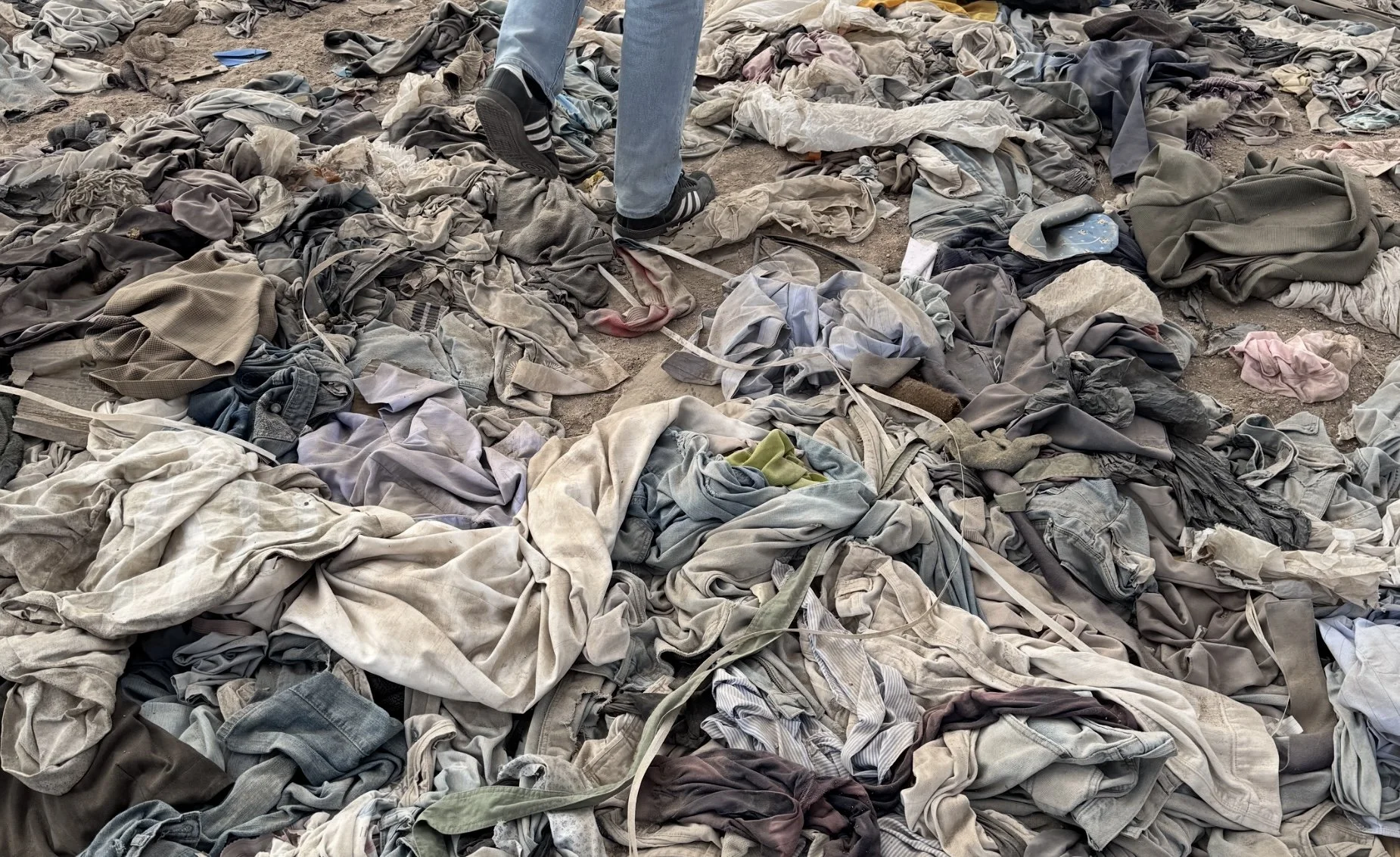
Atop a mound of dumped denim in Alto Hospicio, Atacama, Chile, led by Bastian Barria of Desierto Vestido.
The town of Alto Hospicio, just beyond the duty-free port of Iquique, is precisely where I saw global circularity break down completely. We traveled to the dumpsite with local NGO co-founder and former Alto Hospicio resident Bastián Barria. He sat front seat in our rental car guiding us through the city’s modest neighborhoods and back roads until we arrived to the dumpsite. Here we saw that the infamous piles of “secondhand” clothing are now set on fire for lack of space. These discarded clothes, predominantly from the U.S. and Europe, are not just fast-fashion throwaways. They are also new clothes, unsold inventory, unprocessed online purchases, excess thrift stock, and the remnants of well-intentioned take-back programs. The piles are also made up of heritage denim built to last, the kind we celebrate as sustainable. If even the “better” products end here, what does progress mean? With the daily dumping and burning cycles, the desert’s fragile biodiversity now suffers alongside the people who live there.
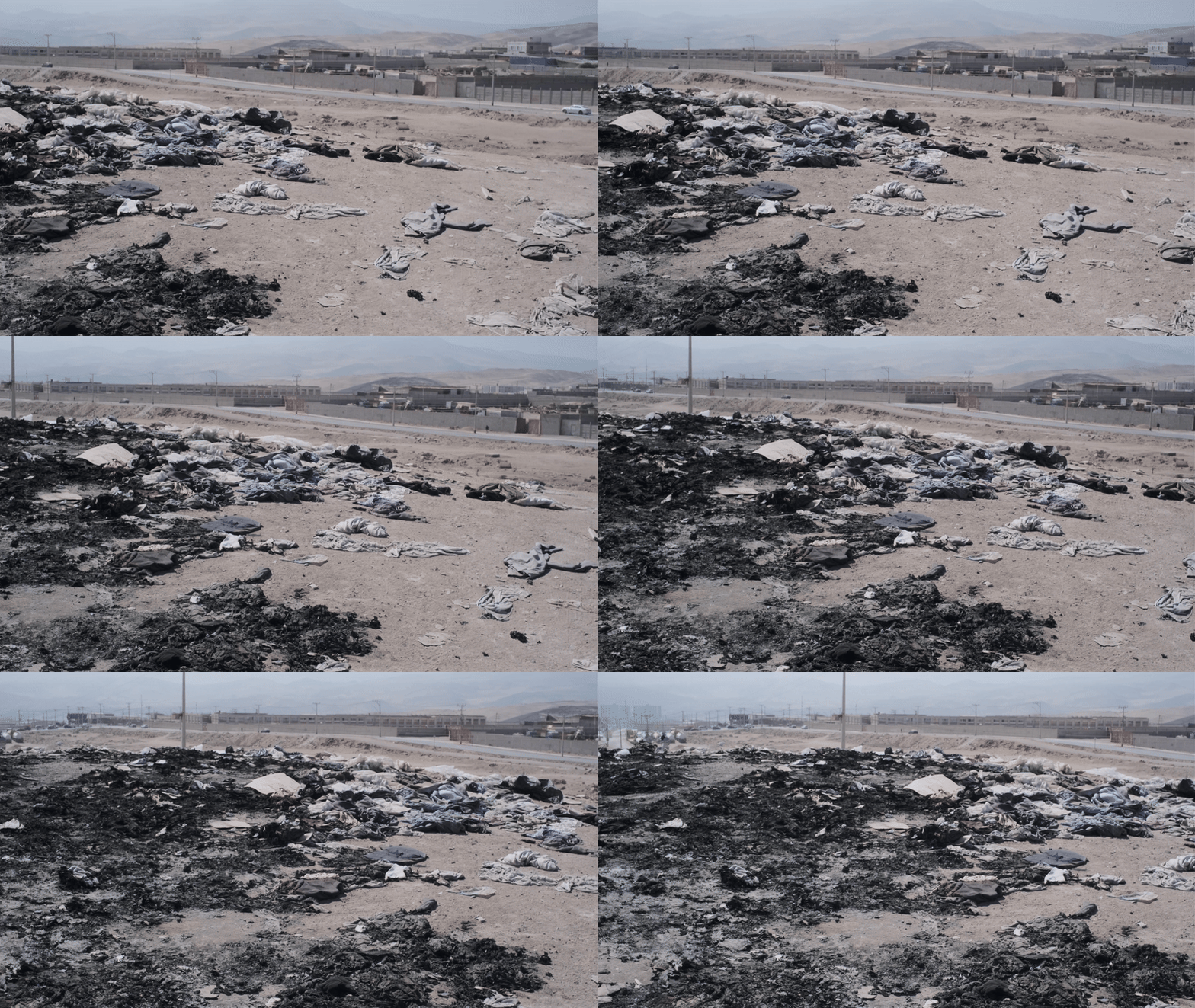
Charred remains of a recently burned mound of clothing in Alto Hospico, Chile.
A few kilometers from the dumpsite is La Quebradilla, Latin America’s largest secondhand market - a continued sea of unwanted clothing. Women sort through mounds of garments, their children playing in nearby clothing mounds, while they organize premium American denim to sell for a dollar.
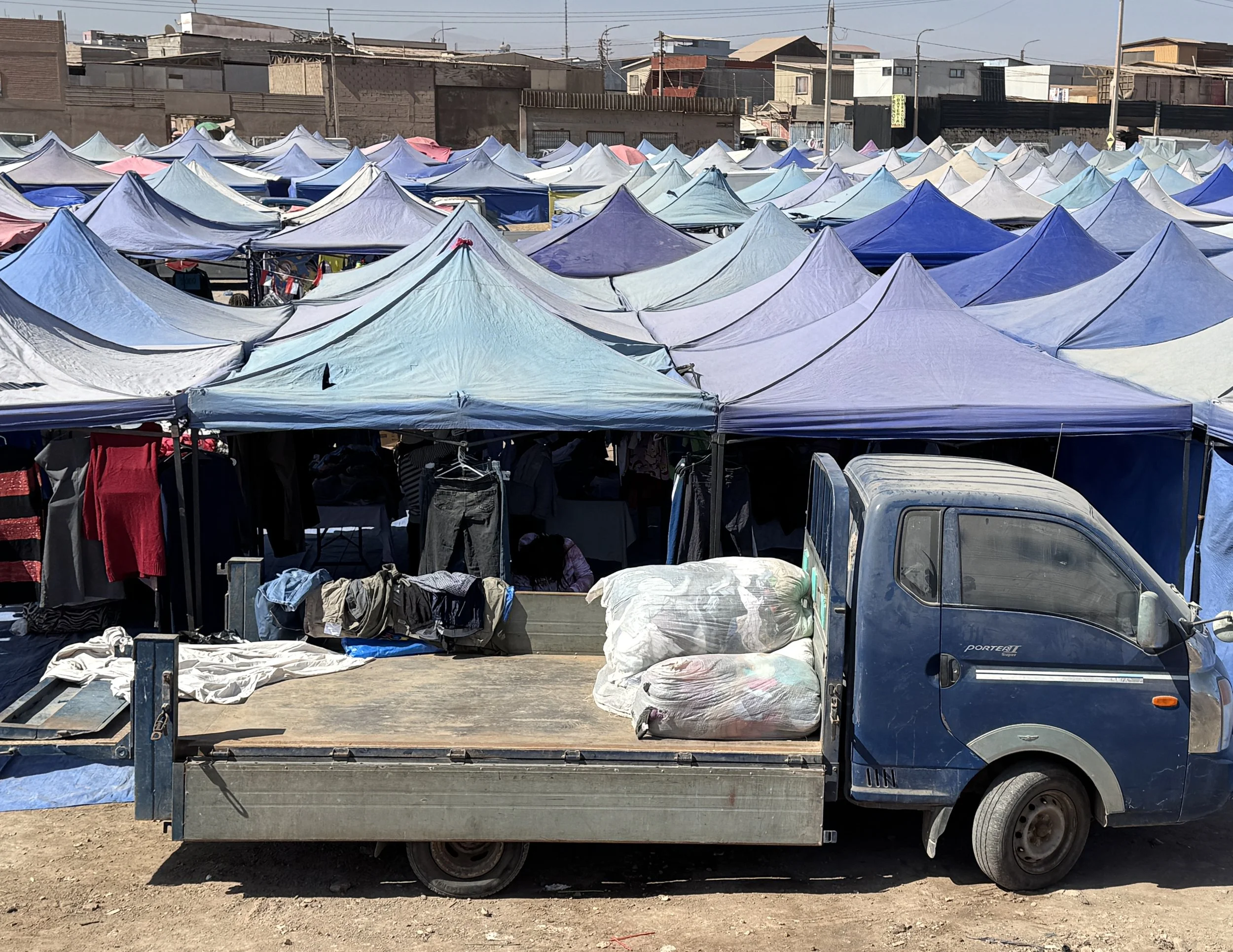
La Quebradilla: A clothing delivery is unloaded among hundreds of tented stalls.
Cumbia blares from tinny speakers on a rolling cart selling local fruit juice. We passed stall after stall bursting with new and used clothing in mostly like-new condition, including a Patagonia puffer vest printed with an investment bank’s logo.
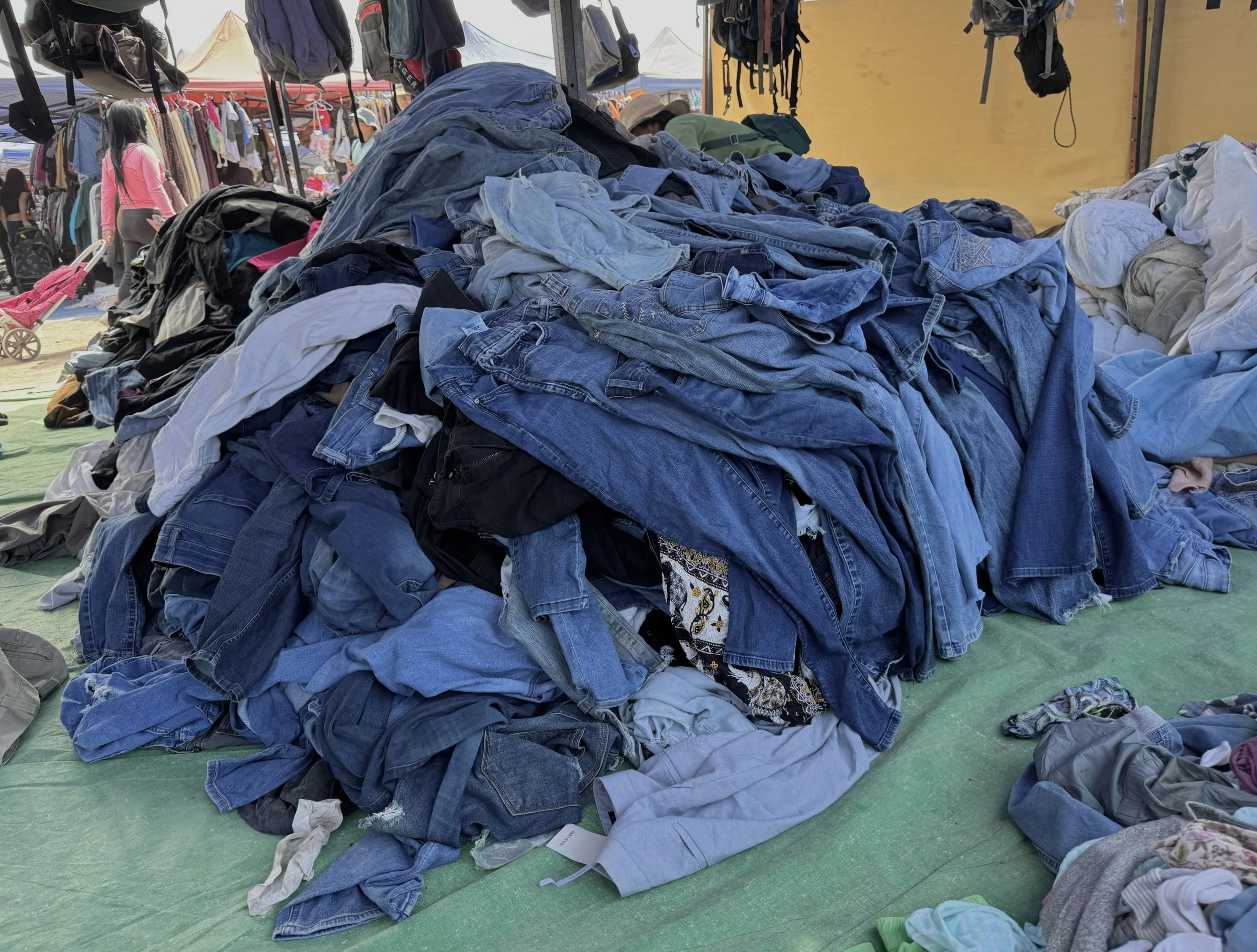
La Quebradilla: A pile of mid to premium denim sold for 900 Chilean pesos (roughly $1) each.
This market is an economic lifeline for the community, sustaining an invisible micro-economy many depend on - locals are even compensated to burn the surplus. But as vast as it is, it cannot absorb the relentless tide of goods arriving in Iquique’s port each day. Chile receives roughly 123,000 tonnes of secondhand clothing annually, with two-thirds arriving in Iquique alone. Of this massive influx, as much as 70 percent is dumped illegally, and now burned to make space for more.
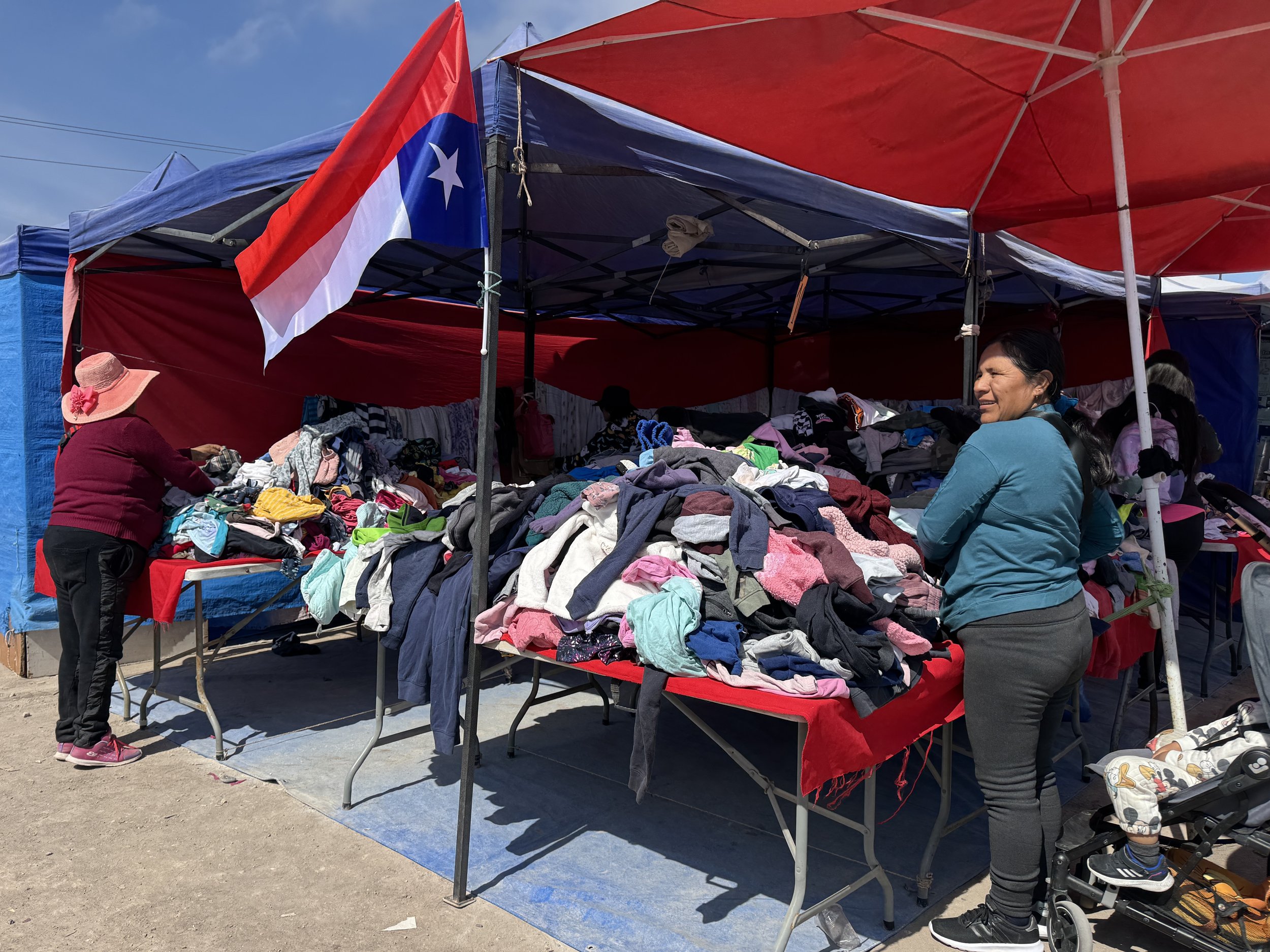
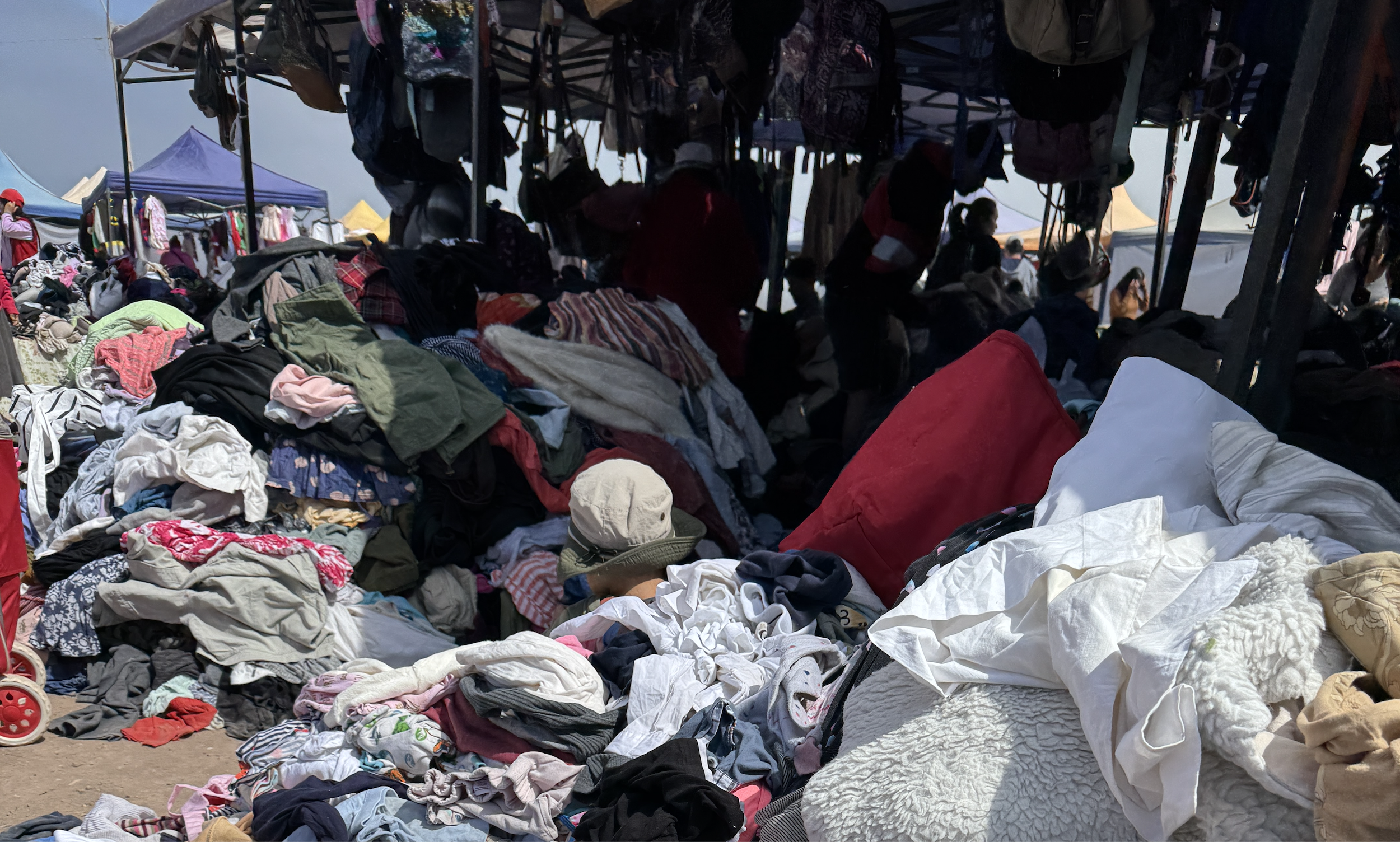
La Quebradilla: Women tending their market stalls; A child sits in a pile while their mother sorts.
As we traveled a few hundred kilometers deeper into the Atacama, nature reveals itself in all her splendor. We saw a wild pack of around sixty vicuñas grazing on the horizon together, many nearly snuggled together, their faces so calm and I swear I saw the corners of their mouth upturned, it looked like we were witnessing a loving family gathering. Maybe 50km down the long deserted road we get out to stretch our legs and see a pair of long-tailed Andean vizcachas - a long eared extremely fluffy south american rodent from the chinchilla family - playfully darting between rocks as if they’re playing hide and seek with each other, and as we continued a few hundred miles towards the salt flats we witnessed migrating Chilean sandpipers foraging around the shallow salt lagoons.
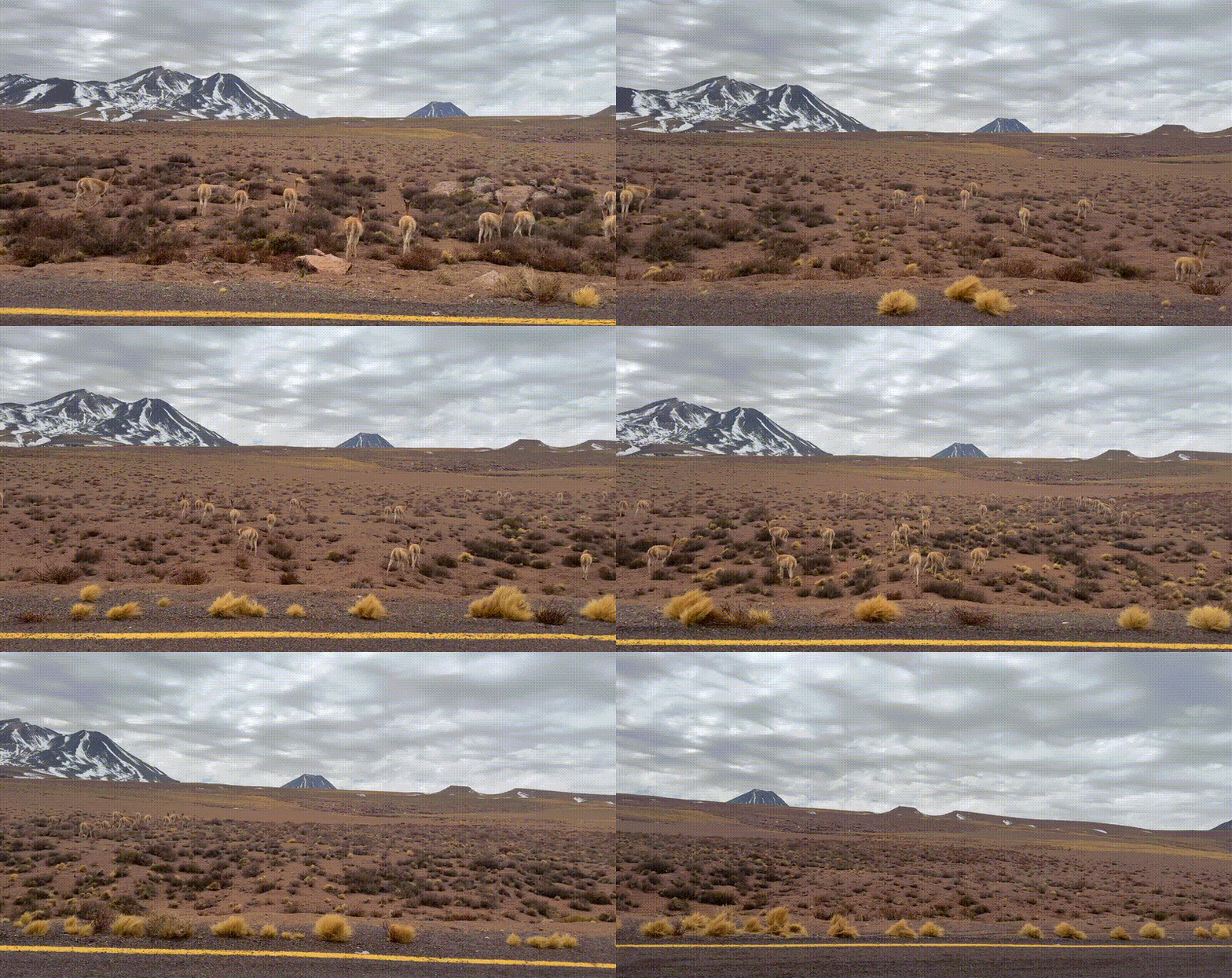
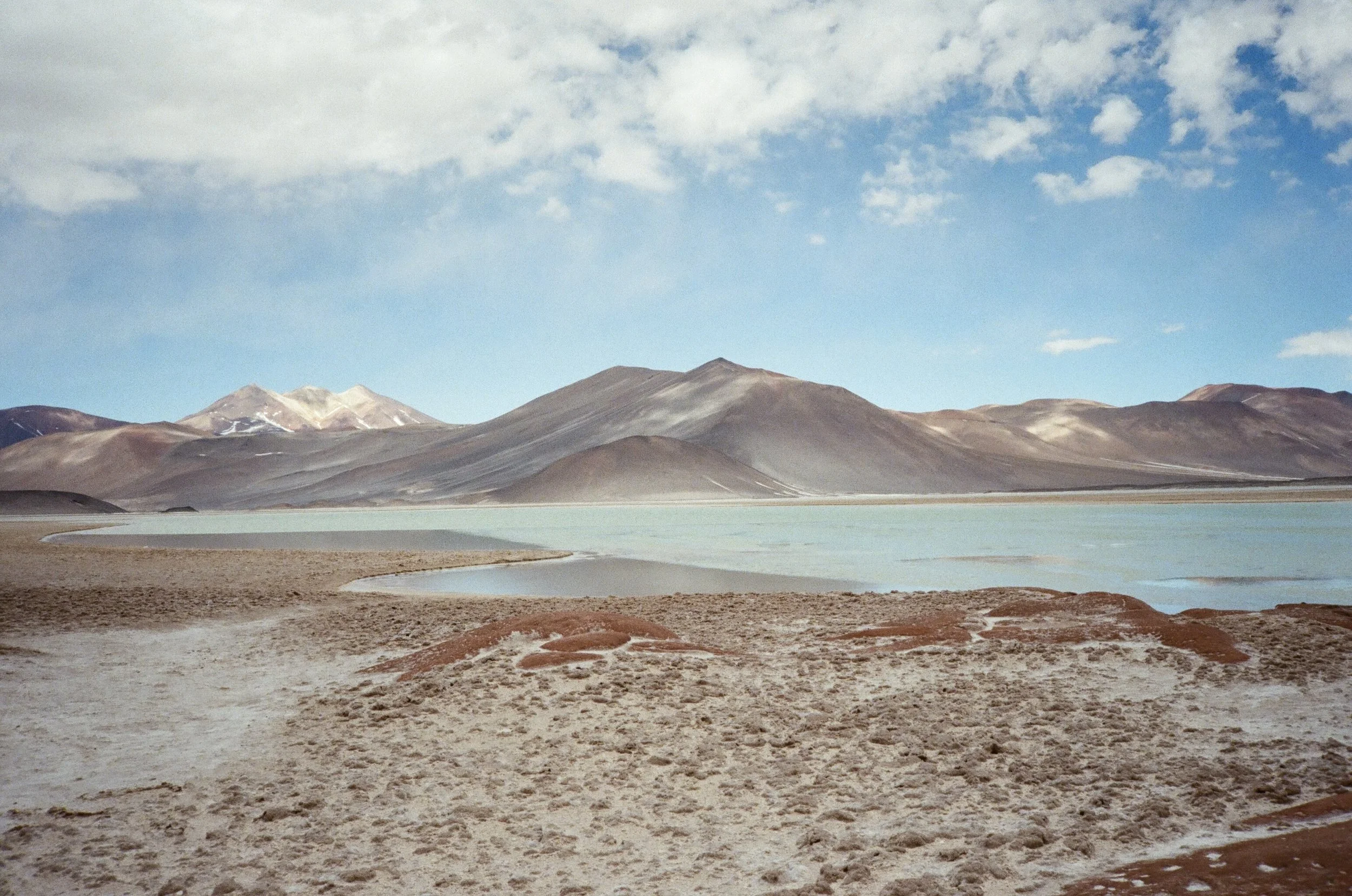
Atacama Roadside scenes: Roaming native vicuñas; Salar de Talar salt flats, home to many avian species.
Just days earlier, we had been on Rapa Nui (Easter Island), where my grandfather served as the island doctor in the 1950s. I grew up hearing stories from my father about swimming in pristine Anakena beach as a boy as the best break for body-surfing, turquoise water, hand-carved moai statues on-looking from the dunes, and an informal community meeting point. Walking with my son along the same beach, I saw the sand glistening, but now with visible macroplastics - fragments carried by the South Pacific Gyre from across the world. Ten percent of that plastic is estimated to come from clothing. My grandfather always said the moai were the island’s true narrators because they had seen everything. I wondered what they would say now.

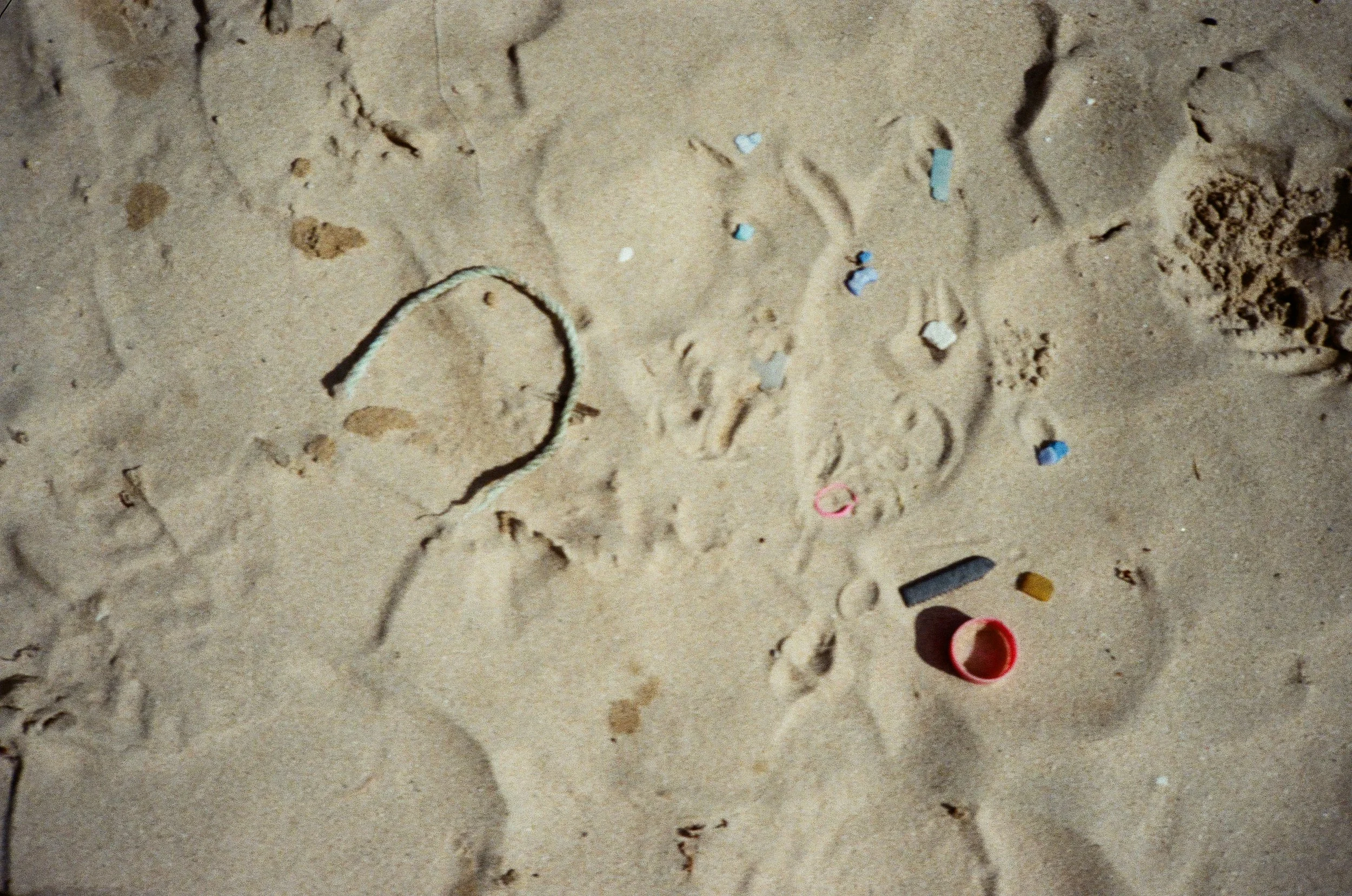
Rapa Nui: Moai at Rano Raraku quarry, carved 800 years ago from compacted volcanic ash; Macroplastics laying in the sand at Anakenna beach.
In the past year both Chile and Europe announced an expansion of their extended producer responsibility (EPR) laws to include textiles - progress that has been celebrated internationally. But many, including Bastián, are skeptical. Infrastructure is lacking, and containers filled with bales of clothing continue to arrive from the U.S., Europe, and Asia. At its core, the policy does not address the root cause of overproduction in the Global North and risks pushing unwanted clothing further down the value chain, exacerbating the issue or redirecting excess to other vulnerable countries in the Global South.
My son won’t remember the smell of burned denim, but I will. It sits in my permanent scent memory bank along with fresh cut grass walking to elementary school and my grandmother’s living room. And with it the weight of what we’ve contributed to and the legacy my son and his peers will inherit. The moai and the sand dunes still stand, witnesses to centuries of culture and biodiversity, and now our legacy they were never meant to see: textiles, ash, and macroplastics in the same lands my own ancestors held sacred. Their gaze reminds me that true sustainability centralizes itself in the dignified recognition of the world’s most isolated landscapes and the communities living among them.
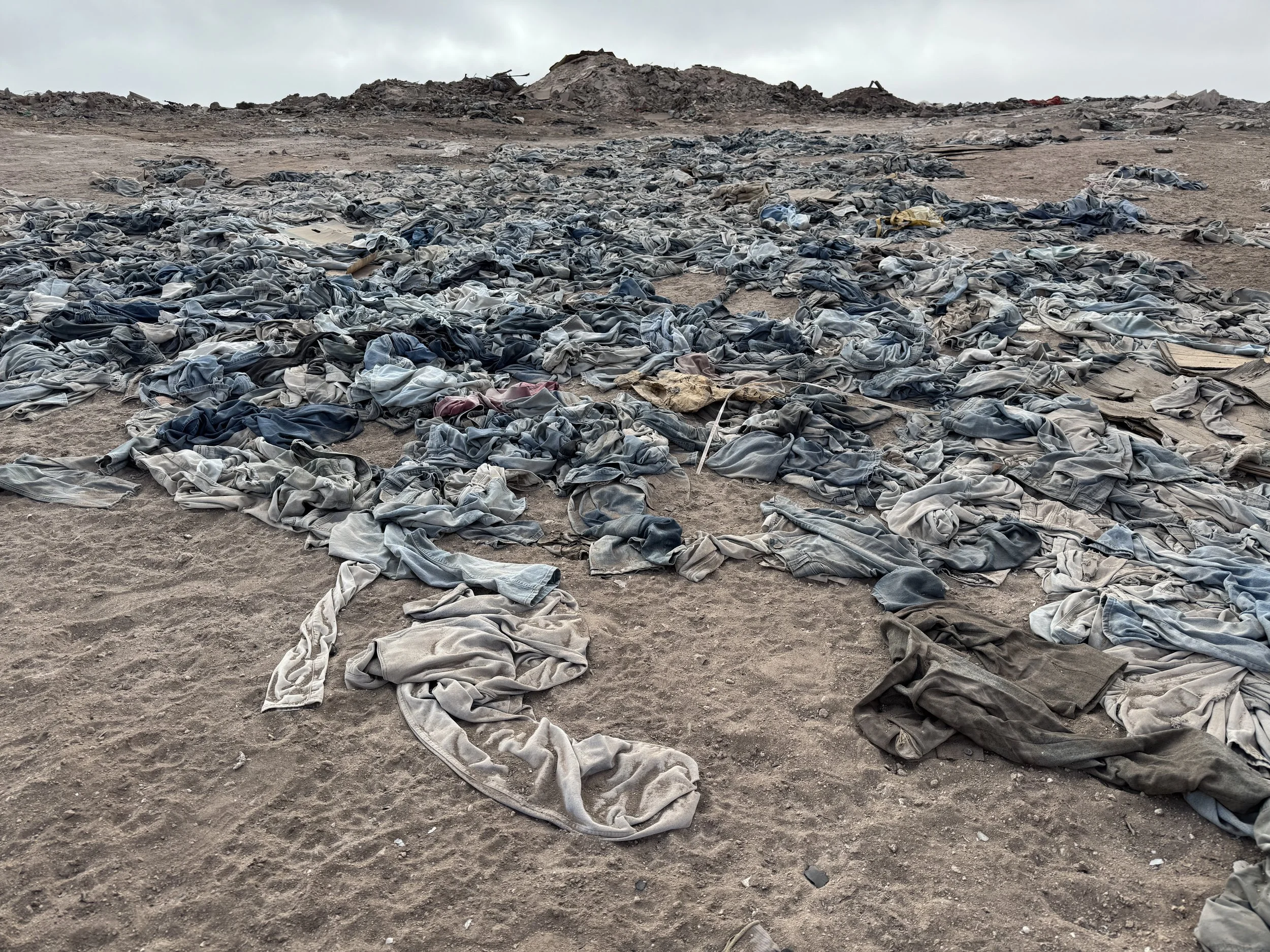
Freshly dumped denim pre-incineration. Alto, Hospicio, Atacama, Chile.